We spoke with Miriam Atkin, assistant editor and grants manager at Litmus Press, in our latest Member Spotlight.
 What is the history behind Litmus Press? When was it founded and what is its mission?
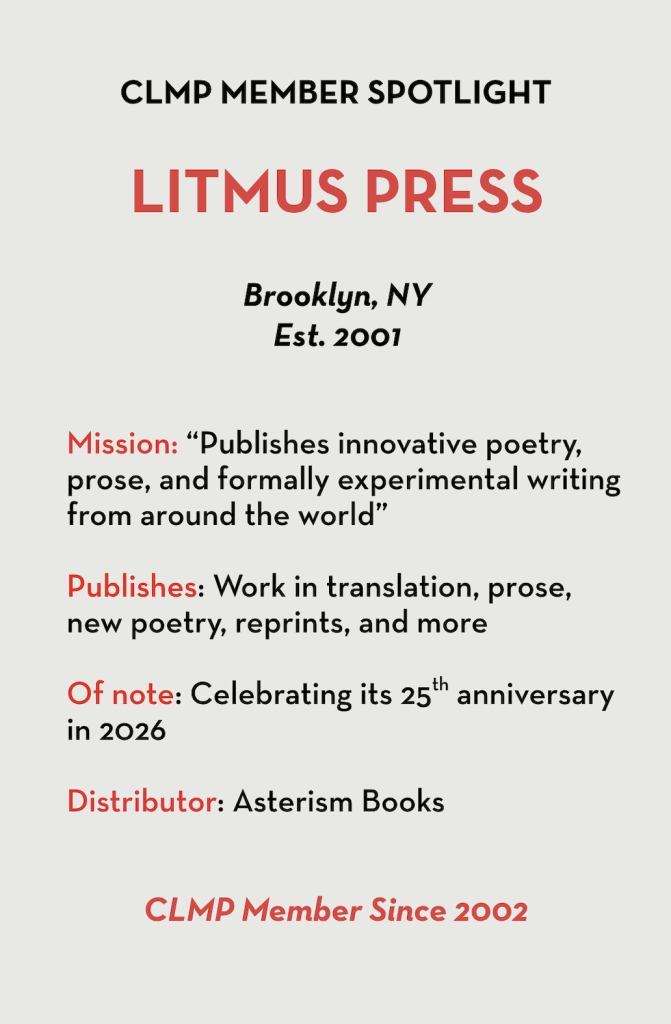
Litmus Press grew out of Aufgabe, the translation journal E. Tracy Grinnell began in 1999 and first published in 2001. The project brought poets, translators, and experimental writing communities into dialogue across languages, generations, and national borders. Each issue of the journal featured work from a specific country—France, Germany, Mexico, Japan, Morocco, Brazil, Italy, Russia, Poland, El Salvador, Canada (Quebec), India—alongside a commitment to new poetry, reviews, essays, and prose experiments from American writers, consistently including work from Canada, Mexico, Central and South America to establish a truly international dialogue on poetics. All of the journal’s thirteen issues are now available online thanks to the Jacket2 Reissues archive.
This is our mission statement: “Litmus Press publishes innovative poetry, prose, and formally experimental writing from around the world. We champion avant-garde legacies through our stewardship of foundational feminist predecessors of small press publishing and the creation of resources that deepen literacy and appreciation of complex works. In cultivating a transnational and diasporic literary landscape that resists aesthetic, generic, and geopolitical boundaries, we envision a future that everyone can inhabit.”
Can you tell us about some recent or upcoming Litmus Press titles?
 We have some exceptional forthcoming titles in 2026 and 2027, including work in translation, prose, new poetry, reprints, and more.
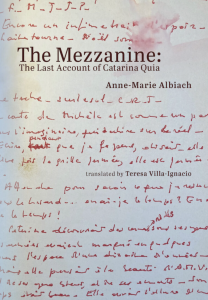
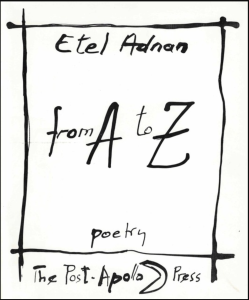
We are championing transnational experimentation with fall 2026 publications by two major yet underrecognized figures of the French avant-garde. Anne-Marie Albiach (1937–2012), a key experimental poet of the 1960s to the 1980s, appears with her only novel, The Mezzanine, The Last Account of Catarina Quia, translated into English for the first time by Teresa Villa-Ignacio, as well as a new edition of Mezza Voce, translated by Joseph Simas, which was originally published by The Post-Apollo Press in 1988. We’re also publishing an expanded edition of Danielle Collobert’s Notebooks 1956–1978, translated by Norma Cole and Jérémy Victor Robert, restoring previously untranslated journal passages. Collobert’s work, shaped by her involvement in the Algerian resistance, remains largely unknown to English-language readers.
On the reprint and archival side, our Open Poetics project recently released Carla Harryman’s visionary experimental performance work Memory Play, originally published by Leslie Scalapino’s O Books in 1994, in an expanded, open-access digital edition with multimedia resources that offer historical and critical context. This winter, we’ll be publishing a new edition of Objects in the Terrifying Tense, which gathers Leslie Scalapino’s uncollected expository prose across four decades in the most comprehensive view yet of her critical writing practice.
We’re also thrilled to be publishing The Starry Field, a collection of new Two-Spirit and Indigequeer poetry edited by Crisosto Apache and Julian Tanya (Julian T. Brolaski), in September. This book is a powerful gathering of established and emerging queer Native writers that reflects the movement of Indigenous futurity.
See our full list of 2026–27 titles here.
Can you tell us more about the Open Poetics project?
 Open Poetics is a digital publishing project created in partnership with CUNY’s Manifold Scholarship, an open-access web and e-book publishing platform. The project offers critical and contextual materials that help readers, students, and writers engage with complex works on their own terms. Open Poetics serves as a living archival response to the challenges of visibility and longevity faced by avant-garde writing. For us, open means moving beyond the gatekeeping norms of traditional literary institutions and affirming the value of poetry for anyone who seeks it.
Open Poetics Series 1 focuses on lesser-known and out-of-print works originally published by O Books and The Post-Apollo Press; each title has been expanded to include critical essays, alternate versions, reviews, translations, and archival images. We will launch Series 2 in early 2027, with a digital edition of The History of the Loma People by Paul Degein Korvah, which was originally published by O Books in 1995. This Open Poetics edition will include a new volume, Reinterpreting the History of Liberia from an Indigenous Perspective, by Kormah Korvah, Paul Degein’s son, as well as historically contextualizing information about the Liberian Civil War. Series 2 will continue to draw from the Litmus Press, O, Post-Apollo, and Burning Deck catalogues, with an open format to accommodate a variety of genres and approaches to poetics.
Litmus Press is celebrating its twenty-fifth anniversary this year. How are you honoring the occasion, and what are your hopes and goals for the press’s future?
 To celebrate twenty-five years of our work, we’ve launched our twenty-fifth anniversary campaign, Small Press, 25 Years!, a public commitment to securing the long-term future of Litmus Press. We have big ambitions for what a small press can make possible—and with the help of this campaign, we are building the stability to keep taking artistic risks, stewarding our archives and acquired press legacies with care, and developing new resources for the appreciation of complex works. The momentum and support from the small-press community has been truly inspiring.
Throughout our anniversary year, we’ll host a series of intimate gatherings in support of the campaign, including celebrations at Et al. in San Francisco on September 10, 2026, and at The Poetry Project on October 14.
Which distributor is Litmus Press working with? How can bookstores and libraries find and order your titles?
We work with Asterism Books for distribution. Bookstores and libraries can find our full catalog and place orders through Asterism’s platform here.
Are there any indie bookstores (or libraries) that you think do a particularly good job featuring titles from indie publishers? If so, what do they do?
Yes! A few immediately come to mind. Unnameable Books, in Brooklyn and Western Massachusetts, has demonstrated a longstanding commitment to independent publishers through both its incredible inventory and event programming. Woodland Pattern, in Milwaukee, is a nonprofit venue and bookshop with a monthly subscription model that delivers curated bundles of small-press titles to readers. And City Lights, in San Francisco, foregrounds independent and experimental writing through its dual role as bookstore and publisher.
The Rensselaerville Library, serving the rural hilltowns north of the Catskills, actively acquires chapbooks and small-press poetry, pairing this with readings by experimental poets in a region where such programming is rare.
We have been supported over the years by institutional memberships. The Arizona State University Poetry Center provides sustained support to small presses through subscriptions and long-term partnerships, including with Litmus Press. And the Poetry Collection at SUNY Buffalo, which houses one of the world’s largest poetry archives while actively supporting contemporary small-press work, has also maintained an institutional membership with us since we began publishing Aufgabe in 2001.
How can interested writers submit their work to Litmus Press?
We hold open submission periods for full-length works every few years; outside of those windows, additional manuscripts are accepted via solicitation only. Open calls are announced through our website, email list, Submittable page, and social media, so the best thing to do is follow us and stay connected.